How to Score and Fold a Card Without Cracking
Scoring presses a dent along the fold line so cardstock folds straight and does not crack. Here is how to score, fold and burnish a card base with simple tools.
Tutorial at a glance
Materials
- Cardstock base piece cut to size
- Ruler and pencil
- Bone folder, embossing stylus, empty ballpoint pen or blunt butter knife
- Cutting mat or a few sheets of scrap paper to score on
The fold is the first thing anyone handles on a card, and a wavy or cracked one is hard to hide. Knowing how to score and fold a card properly fixes both problems at once. Scoring means pressing a narrow dent into the cardstock along the fold line before folding, and it is the difference between a base that closes square and one that never quite lines up.
You need a straight edge and something blunt and smooth to press with. The method is the same for every card size.
Why scoring matters
Cardstock is a mat of fibers. Fold it without preparation and the fibers on the outside of the bend are stretched until some break, while the sheet picks its own slightly wandering path. On heavy or colored cardstock that shows as a rough, cracked ridge, often with a pale line where the surface has split.
A score compresses the fibers along one exact line. The sheet becomes weaker there, so it bends precisely where you want, and the compressed fibers stretch more gently, so the surface is far less likely to crack.
Scoring tools
A scoring tool needs a smooth, rounded tip that dents the paper without cutting it. Several things qualify, and some are already in the house.
| Tool | How it scores | Notes |
|---|---|---|
| Bone folder | The pointed end is drawn along a ruler | Also flattens the finished fold with its long edge |
| Embossing stylus | A small metal ball tip drawn along a ruler | Gives a fine, narrow score |
| Empty ballpoint pen | The dry ball tip drawn along a ruler | Test on scrap first to be sure no ink is left |
| Back of a butter knife | The blunt spine drawn along a ruler | Use a knife with no serrations |
| Scoring board | The sheet lies on a grooved board and the tool follows a groove | Convenient for many cards; not required |
Avoid anything sharp. A craft knife or a scissor point cuts through the surface and the card will tear along the fold.
Score, fold and burnish
Start with a base piece cut to size. For a standard A2 side-fold card that is 8.5 x 5.5 in (21.6 x 14 cm), scored across the middle at 4.25 in (10.8 cm). If your pieces are not yet cut, see how to cut cardstock cleanly first.
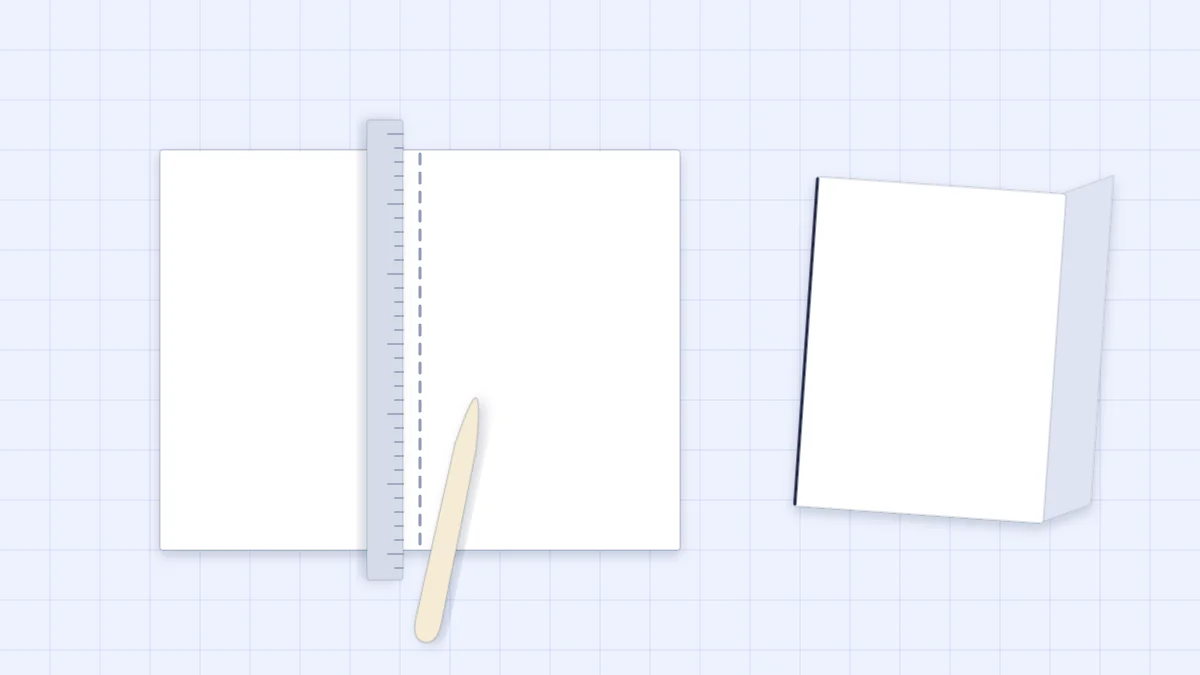
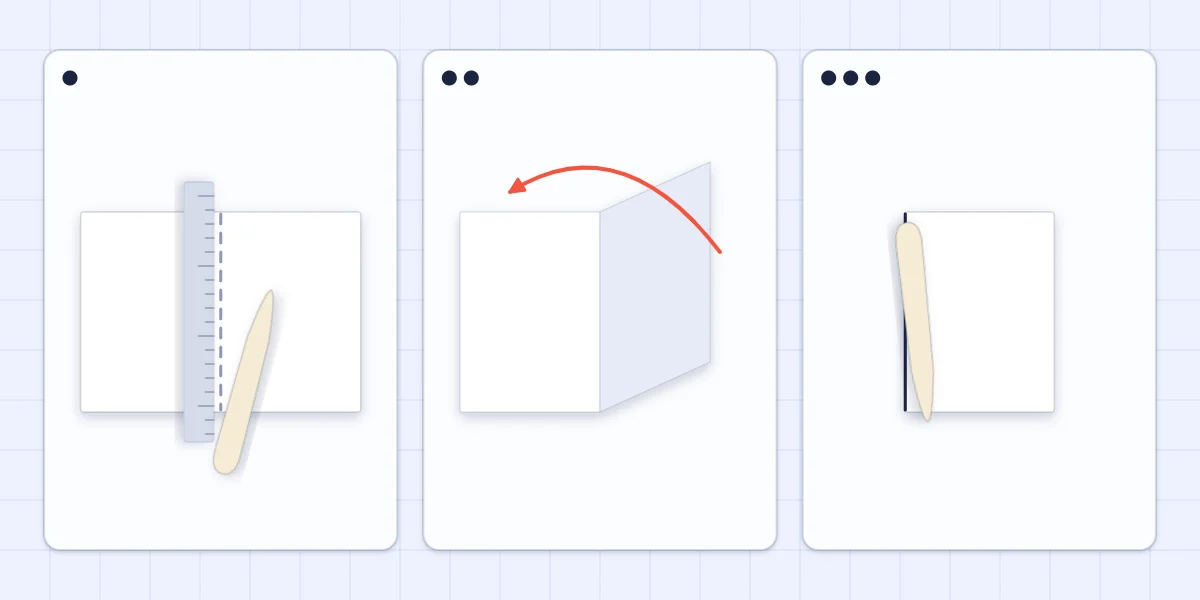
- Score. Lay the piece on a surface with a little give, such as a cutting mat or a few sheets of scrap paper. Mark the middle with a light pencil tick at the top and bottom edges. Hold a ruler firmly on the two ticks and draw the tool along it from edge to edge with steady, medium pressure. One or two passes are enough; the aim is a visible dent, not a groove that almost cuts through.
- Fold. Turn the piece so the dent is on the outside and bring the two halves together around it. The score leaves a dent on the side you pressed and a small raised bump on the other side, and the bump belongs on the inside of the fold. Match the corners at the open edge before pressing the crease.
- Burnish. With the card closed and flat on the table, run the long edge of the bone folder along the fold once or twice. This sets the crease so the card stays shut instead of springing open.
Folding into the dent feels natural, but folding away from it puts the least strain on the surface fibers.
Fold with the grain where you can
Paper fibers mostly run in one direction, the grain, and a fold that runs along the grain is cleaner than one that runs across it. To check, bend the sheet gently both ways before cutting. The direction that curves more easily is with the grain, and that is the direction you want the fold line to run.
When a fold has to go across the grain, score a little more firmly and fold slowly. Grain, weight and finish are explained in the guide to cardstock for card making.
Side-fold and top-fold bases
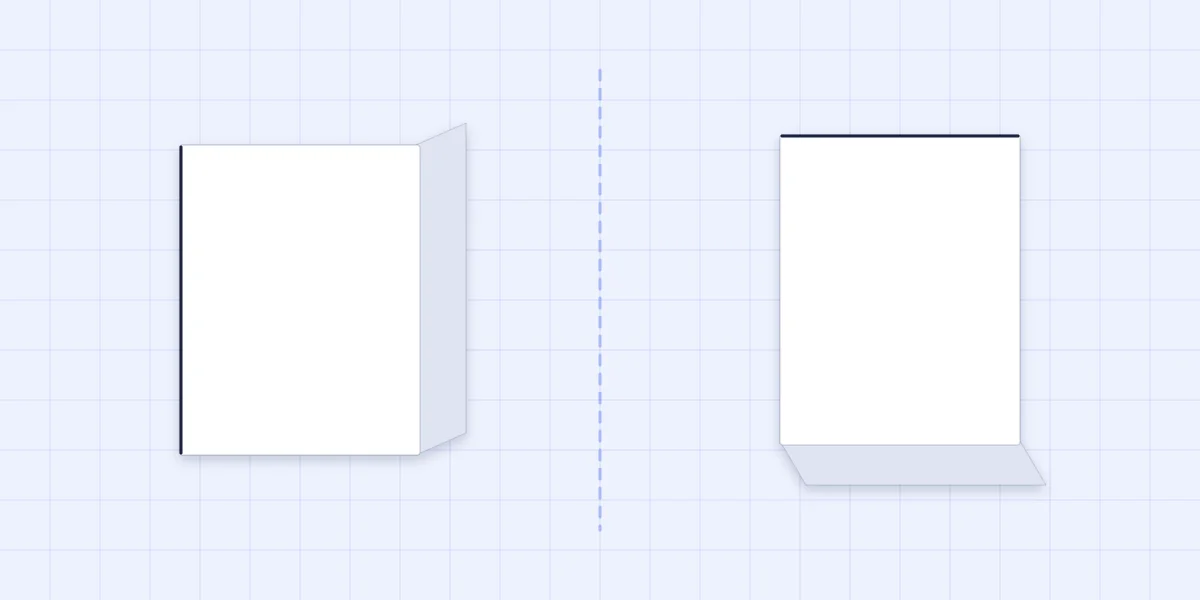
The same letter sheet makes two kinds of A2 base, depending on which way it is halved.
- Side-fold: a piece of 8.5 x 5.5 in scored at 4.25 in. The fold is on the left and the card opens like a book. It suits portrait designs and is the default for most tutorials.
- Top-fold (tent): a piece of 4.25 x 11 in scored at 5.5 in. The fold is along the top edge and the card stands like a tent. It is steadier on a shelf and works well for landscape designs.
Both finish at 4.25 x 5.5 in (10.8 x 14 cm) and fit the same envelope.
Fixing a crooked fold
If the edges of the closed card do not meet, the score was off-center or slanted. There are two fixes.
- If the overlap is very small, close the card, hold it flat and trim a sliver from the three open sides so front and back match. The card ends up slightly smaller, which rarely matters.
- If the fold is clearly slanted, do not score a second line beside it. Two scores close together make a soft, wobbly spine. Cut the piece down into mats and start a fresh base.
When heavy or coated cardstock cracks
Very heavy cardstock and sheets with a pearlescent, glossy or printed coating crack more easily, because the coating cannot stretch as far as the paper beneath it.
- Score in two or three gentle passes to build up a wider, softer dent.
- Check the grain and turn the piece so the fold runs with it, if the size allows.
- Fold slowly, a little at a time, and burnish through a piece of scrap paper so the bone folder leaves no shiny streak.
- On white-core cardstock, a crack shows as a white line. Running a matching pencil or fine-tip pen lightly along it makes it far less visible.
Watch out
Pressing harder is not the cure for cracking. A score that is too deep breaks the surface fibers before you even fold, and the card will eventually split along the spine.
With a clean base folded, the front is ready for its first layers. The guide to layering cardstock with mats and borders is the natural next step, and the folding skills here carry straight over to basic pop-up folds later on.
Frequently asked questions
Which way do you fold a card after scoring?
Fold so the raised bump of the score is on the inside of the card and the dent is on the outside. This puts the least strain on the surface fibers, which helps prevent cracking. It feels backwards at first because folding into the dent seems natural.
What can I use instead of a bone folder?
The back of a blunt butter knife, an empty ballpoint pen or an embossing stylus all work for scoring along a ruler. For flattening the fold, the side of a smooth pen barrel or the back of a spoon does the job. Avoid anything sharp, which would cut the surface.
Why does my cardstock crack when I fold it?
Cracking usually means the sheet was not scored, was folded across the grain, or has a coating that cannot stretch. Score in gentle passes, fold with the grain where possible and fold slowly. Heavy and coated cardstock needs more care than plain medium-weight sheets.