Cardstock for Card Making: Weights, Finishes and Grain
How to read paper weights, which cardstock suits card bases and which suits layers, and how finish, core and grain affect the finished card.
Tutorial at a glance
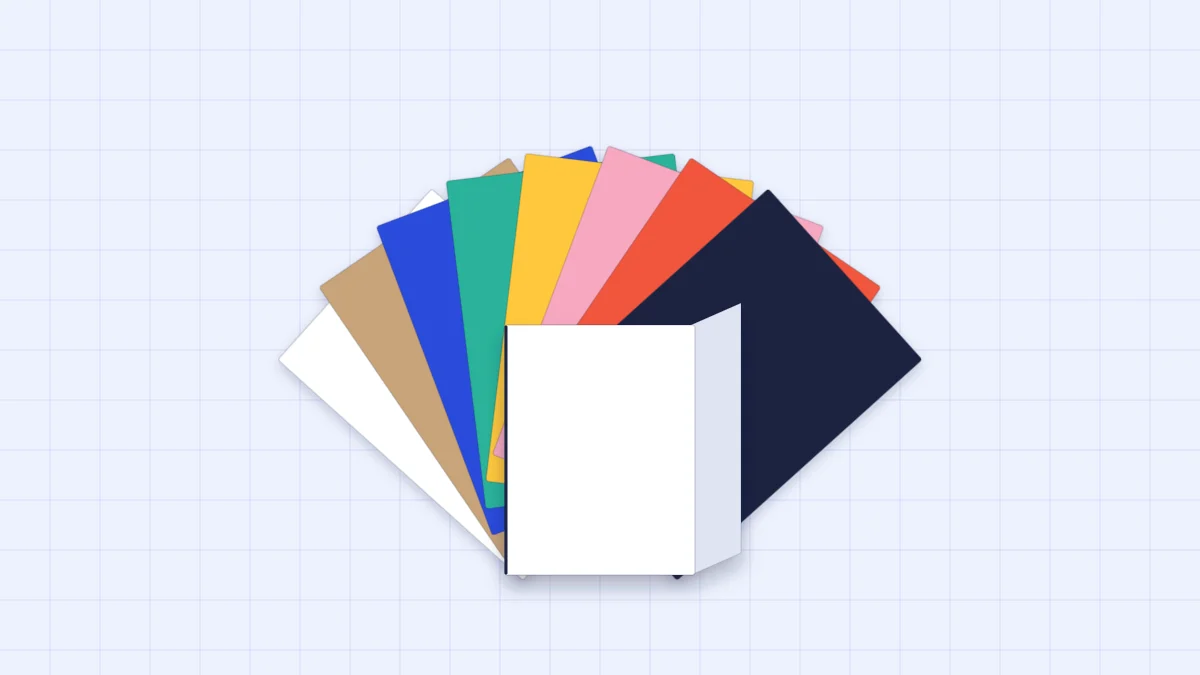
Materials
- Heavy smooth white cardstock for card bases
- Lighter colored cardstock for mats and cut shapes
- Patterned paper for flat layers (optional)
- Kraft cardstock (optional)
Choosing cardstock for card making is mostly a question of weight. A base that is too thin sags when the card stands on a shelf, and a layer that is too thick is hard to cut and makes the card bulky. Once you can read the numbers on a pack and know which range suits which job, the rest of the choices, such as finish, core and sheet size, are easy.
This reference covers weight, finishes, solid and white cores, grain direction, sheet sizes and storage. If you have not made a card yet, the beginner’s guide to card making is the place to start.
Weight: why gsm is the number to trust
Paper weight is printed on the pack in pounds (lb), in grams per square meter (gsm), or both. The two systems measure different things.
Gsm is the weight of one square meter of that paper. It does not depend on the size of the sheet or the kind of paper, so a 250 gsm sheet is always heavier than a 200 gsm sheet.
The pound rating is the weight of a ream of the paper at a basic sheet size, and that basic size changes with the paper category. “Cover” stock, “text” paper and “index” stock are each weighed at a different sheet size. The result is that 80 lb text paper is far thinner than 80 lb cover stock, even though the number is the same. When a pack gives only pounds, look for the word after the number. When it gives gsm, compare that instead.
Which weight for which job
Card bases are usually made from heavier cardstock, and layers and cut shapes from lighter cardstock. The ranges below are common ones, not rules, and they overlap on purpose.
| Weight (approx.) | Typical name | Good for |
|---|---|---|
| 90-120 gsm | Text-weight or printer paper | Envelopes, inner liners, folded paper snowflakes |
| 120-160 gsm | Patterned paper, light cardstock | Strips and layers glued flat onto something sturdier |
| 160-220 gsm (65-80 lb cover) | Light to medium cardstock | Mats, panels, hearts, flowers and other cut shapes |
| 216-300 gsm (80-110 lb cover) | Heavy cardstock | Card bases |
A base at the lighter end of its range is fine for a card with one or two flat layers. A card that carries several mats, foam adhesive or a pop-up needs a base nearer the heavy end, or the front will bow under the load. Going lighter for layers matters too: three layers of heavy cardstock make a stiff, thick card, and thick or rigid cards can cost more to mail, so check with the postal service if in doubt.
Finishes
The surface changes how a sheet cuts, glues and takes pen.
- Smooth: the all-rounder. It cuts cleanly, glue grips it well and a fine-tip pen writes on it without skipping. Choose smooth white for bases and for any panel that will carry a handwritten greeting.
- Textured: linen, canvas or hammered surfaces add interest to a plain mat. Fine pen lines can wobble over the texture, so test the pen on a scrap.
- Kraft: brown, unbleached-looking cardstock. It makes white and bright colors stand out and suits rustic designs.
- Pearlescent or metallic: a coated, shimmering surface. It looks elegant in small amounts, but the coating can crack along a fold and some glues grip it poorly, so score carefully and test the adhesive.
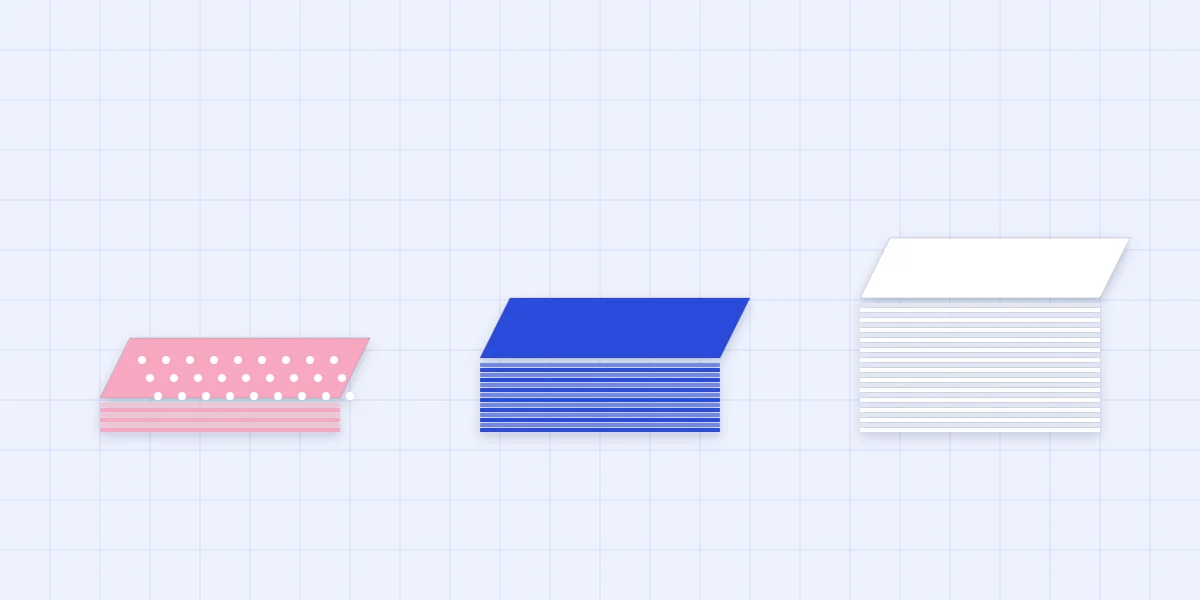
- Patterned paper: dots, stripes and prints. It is usually thinner than cardstock, which makes it a layer to glue onto something sturdier, not a base.
Solid core and white core
Solid-core cardstock is dyed all the way through, so a cut, torn or folded edge is the same color as the surface. White-core cardstock has color on the outside only. Tear it, sand it or fold it sharply and a white line appears.
Neither is better. Solid core gives the cleanest folds and edges on a colored card base. White core is useful when you want a soft white edge on torn paper, as in collage. To check an unlabeled sheet, tear a small corner and look at the inside.
Grain direction and how to find it
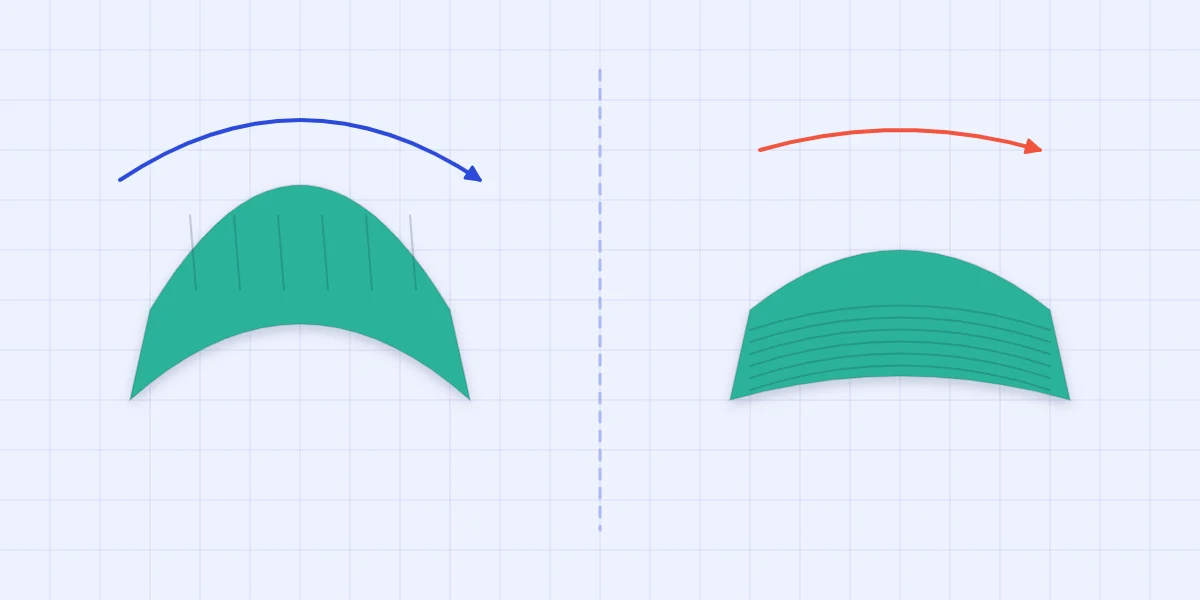
The fibers in a sheet of paper mostly line up in one direction, called the grain. Cardstock folds more easily and more cleanly along the grain than across it. A fold made against the grain is more likely to look rough or crack, especially in heavy or coated stock.
To find the grain, hold the sheet flat and gently bend it into a curve one way, without creasing it, then turn it a quarter turn and bend it the other way. One direction gives way easily and the other resists. The grain runs along the bend that felt easier, in the same direction as the tube you were starting to form.
Where you can, plan the base so its fold runs with the grain. Many sheets are cut the same way within a pack, so test one sheet and pencil a small arrow on the pack. Getting a clean crease is covered in how to score and fold a card without cracking.
Sheet sizes: letter and 12 x 12
Cardstock is mostly sold in US letter size (8.5 x 11 in) and in 12 x 12 in (30.5 x 30.5 cm) sheets. Letter is the efficient choice for standard A2 cards, since one sheet makes two bases with no offcut.
A 12 x 12 sheet suits larger or square cards and long strips, and it usually comes in a wider range of colors and patterns. It leaves offcuts when cut into A2 bases, which become mats and focal pieces.
Tip
A sensible first purchase is one pack of heavy smooth white for bases and one mixed pack of lighter colors for layers. Add kraft and patterned paper once you know which colors you reach for most. Ideas for combining them are in the guide to card color combinations.
Storing cardstock
Store sheets flat, away from direct sunlight and damp. Paper stored on its edge slumps into a curve, sunlight fades dyed colors along the exposed edge, and damp air makes sheets wavy. A shallow box, a drawer or a stack of document trays works well.
With the right sheet in hand, the next skill is turning it into accurate pieces: see how to cut cardstock cleanly.
Frequently asked questions
What weight of cardstock is best for card bases?
Card bases are commonly made from cardstock of roughly 216-300 gsm, often sold as 80-110 lb cover. The lighter end suits simple flat cards and the heavier end suits cards with several layers or raised pieces. These are common ranges, not fixed rules.
Why is 80 lb paper sometimes thin and sometimes thick?
Pound ratings depend on the paper category. Text paper and cover stock are weighed at different basic sheet sizes, so 80 lb text is much thinner than 80 lb cover. Comparing gsm avoids the confusion because it is measured the same way for every paper.
How do I find the grain of a sheet of cardstock?
Bend the sheet gently into a curve in one direction, then turn it and bend it the other way. The direction that bends more easily is with the grain. Folds made along the grain are cleaner and less likely to crack.